

.png)

.png)
.png)
How HR Leaders Can Adapt to Any Situation: Turning Uncertainty into Stability

How quickly can your organization adapt when priorities change? Do you have clear visibility into employee sentiment and workforce readiness? Are your decisions guided by assumptions or real insights?
In moments of uncertainty, HR leaders are expected to provide direction, confidence, and continuity. Adaptability is no longer optional, it is a leadership capability.
Adapt Quickly When Circumstances Change
Work does not stop when circumstances become challenging. Deadlines remain. Customers still depend on your teams. Employees still look to leadership for reassurance.
HR leaders who adapt quickly can reorganize priorities, enable flexible work arrangements, and ensure business continuity while protecting employee well-being. Their ability to respond decisively helps organizations stay steady when the environment feels unpredictable.
Implement Flexible Work Arrangements Immediately
- Allow remote work, adjusted hours, or temporary role shifts where needed.
- Give managers authority to approve flexibility without lengthy approval chains.
- Track productivity through deliverables and outcomes rather than attendance.
Flexibility keeps operations running while reducing stress on employees facing unexpected constraints. It also signals trust, which reinforces engagement and confidence during uncertainty.
Avoid Common Crisis Assumptions: Focus on Communication
One of the most frequent pitfalls during disruption is assuming that simply “communicating” is enough. Effective communication during uncertain times must be clear, frequent, reliable, and actionable.
Crisis Communication Impact
This chart shows how decision quality and employee confidence change with time and communication effectiveness:
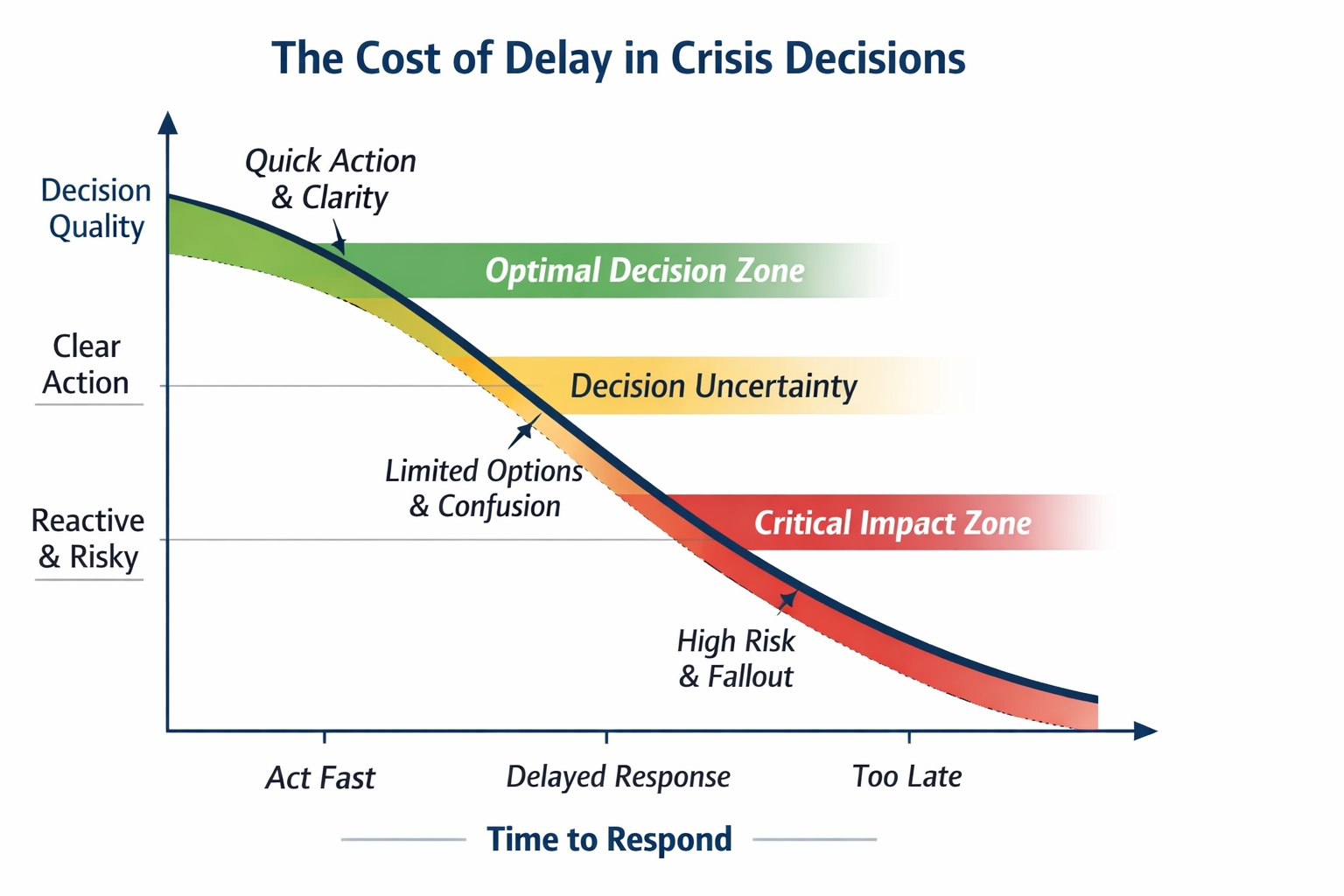
Adaptability in HR is about speed, clarity, and trust. When organizations empower their teams with Zenithr employee experience solution, HR leaders gain the ability to:
- Respond quickly and decisively.
- Enable flexible work arrangements.
- Communicate effectively.
By doing so, they can maintain performance and engagement, even in unpredictable situations.
HR leadership is not just about managing disruption it’s about turning uncertainty into stability and resilience.
People also read...



Turn these insights into actions for your people

.png)
.png)


